
Gansu Hongfeng Machinery Co., Ltd., located in Pingliang City, Gansu Province, is a high-tech enterprise restructured and reorganized from the large-scale second-class military enterprise, the state-owned 920 Factory. It specializes in the research, development, and manufacturing of energy-saving products such as drain valves and condensate water recovery devices.
In the course of specializing in the production of energy-saving products and energy-saving devices such as traps and condensate recovery devices, "Hongfeng" takes the revitalization of the national equipment manufacturing industry and the creation of a national brand of traps as its own responsibility, closely tracks the development trends of science and technology and production trends, adheres to the technological innovation strategy of "no one has me, no one has me, no one has me, and I am new", and has realized the transformation from technology introduction, reference and absorption to independent innovation and independent development.
Based on the strict requirements of the steam system for the reliability, stability, durability and safety of pump and valve equipment, the company has established a complete set of quality assurance and control systems including procurement management, production control, performance verification, quality inspection, after-sales service, etc., and wholeheartedly escorts high-quality products.
We always respect and love our customers, and regard them as friends and siblings, and dedicate perfect services with a grateful heart, because customers are the pillar and source of our career success.

For more information?
Contact UsSteam and water are widely used as heat transfer media in heating equipment due to their favorable physical and chemical properties, as well as their cost‑effectiveness.
Physical Properties of Steam
1.At room temperature, water exists as a liquid and readily converts to steam when heated.
2.Steam has a high specific heat capacity and high latent heat of vaporization.
3.It offers good heat transfer characteristics, and its volume decreases significantly upon condensation.
4.As pressure increases, the saturation temperature also rises.
Chemical Properties of Steam
1.Steam is non‑corrosive and harmless to humans.
2.It is chemically stable and presents no fire hazard.
Additional Characteristics
After steam expands to do work, the exhaust steam can still serve as a heat source. It can also be used in a cascaded manner, transferring heat from higher to lower temperature levels.
Heating Methods Using Steam as a Heat Carrier
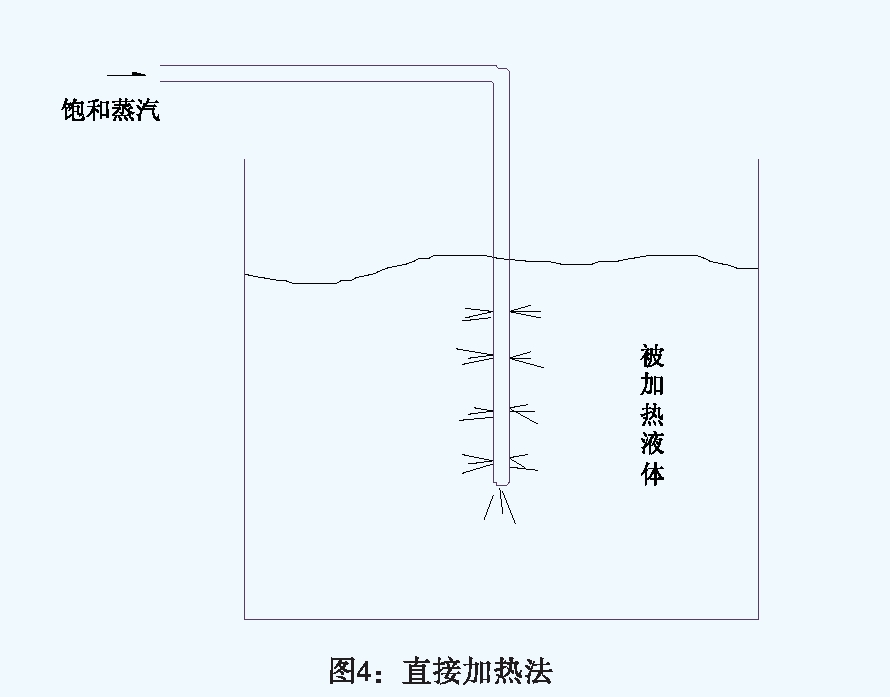
1.Direct Heating
In direct heating, the total heat content of the steam—including both sensible and latent heat—is transferred to the heated material. Both superheated and saturated steam can be used, and steam pressure is not a primary concern. Therefore, reducing steam pressure does not result in energy savings with this method.

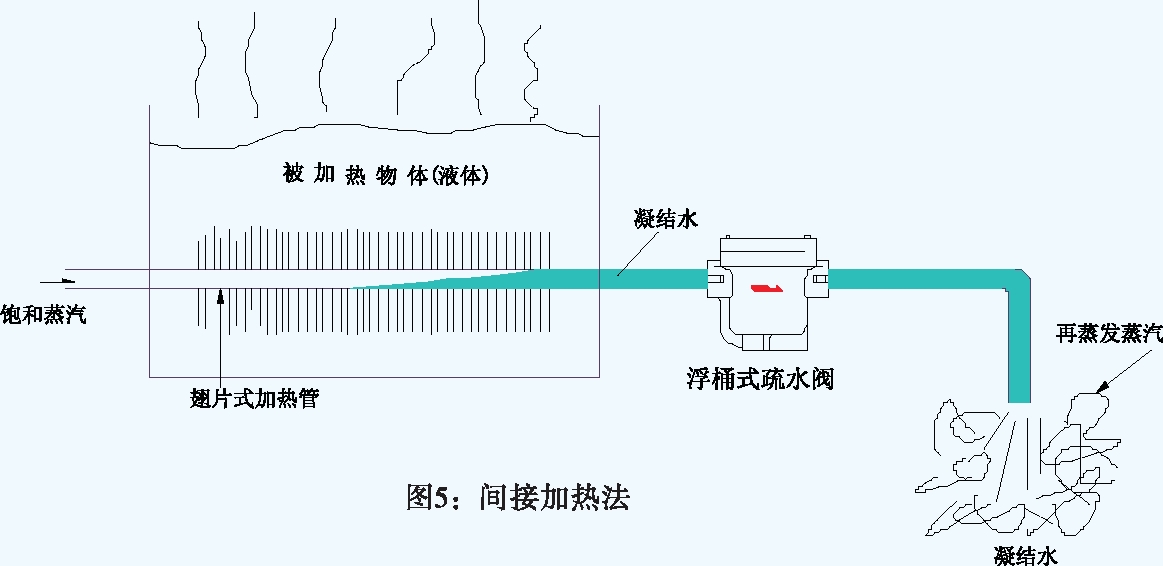
2. Indirect heating method
steam is introduced into heating pipes (heat exchangers), and the heated material contacts the pipe surfaces to absorb the latent heat released during condensation. The condensed water is then discharged to atmosphere through a steam trap (see Figure 5). This method utilizes only the latent heat of steam. As noted earlier, higher steam pressure corresponds to lower latent heat but higher sensible heat in saturated water. Therefore, supplying saturated steam at an appropriate pressure to the heat exchanger is an important factor in achieving energy savings.Steam is introduced into the heating pipes (i.e., heat exchangers), and the heated object comes into contact with the surface of these pipes, and the latent heat released by the steam is absorbed by the heated object, so that the heating is realized. The steam emits latent heat and condenses into condensate. This condensate is then discharged into the atmosphere by a steam trap (see Figure 5). The so-called indirect heating is to use only the latent heat of steam. As mentioned earlier, the higher the vapor pressure, the less latent heat, while the sensible heat of saturated water increases; In other words, the supply of saturated steam at the right pressure for the heat exchanger used is the key to energy savings.