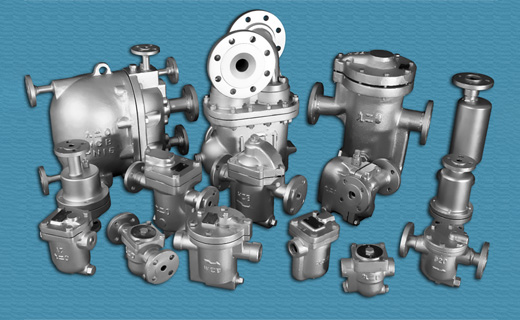
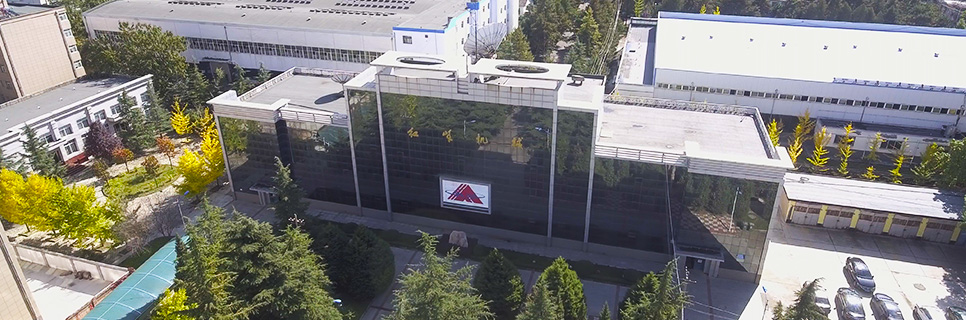
Gansu Hongfeng Machinery Co., Ltd., located in Pingliang City, Gansu Province, is a high-tech enterprise restructured and reorganized from the large-scale second-class military enterprise, the state-owned 920 Factory. It specializes in the research, development, and manufacturing of energy-saving products such as drain valves and condensate water recovery devices.
In the course of specializing in the production of energy-saving products and energy-saving devices such as traps and condensate recovery devices, "Hongfeng" takes the revitalization of the national equipment manufacturing industry and the creation of a national brand of traps as its own responsibility, closely tracks the development trends of science and technology and production trends, adheres to the technological innovation strategy of "no one has me, no one has me, no one has me, and I am new", and has realized the transformation from technology introduction, reference and absorption to independent innovation and independent development.
Based on the strict requirements of the steam system for the reliability, stability, durability and safety of pump and valve equipment, the company has established a complete set of quality assurance and control systems including procurement management, production control, performance verification, quality inspection, after-sales service, etc., and wholeheartedly escorts high-quality products.
We always respect and love our customers, and regard them as friends and siblings, and dedicate perfect services with a grateful heart, because customers are the pillar and source of our career success.

Closed condensate recovery is a comprehensive engineering system integrating fluid mechanics, single‑phase and two‑phase flow principles. The system utilizes centralized steam‑trapping injection technology, high‑and‑low‑pressure common piping technology, and steam‑driven automatic pressurization to return high‑temperature condensate to the recovery unit smoothly under low or zero backpressure conditions. Through the combined action of strainers, steam‑water separation, rapid condensate discharge, pressurized cavitation eliminators, flexible liquid‑level self‑adjusting devices, and flash‑steam suction units, the high‑temperature condensate is delivered stably to the end user while maintaining the recovery unit at a lower pressure. The optimized design of cavitation elimination devices and piping improves pump suction conditions, ensuring that high‑temperature pumps operate without cavitation throughout the closed system.
Basic Principle
During system operation, high‑temperature condensate from heating equipment first enters the residual‑pressure piping network and related devices through traps. When single or multiple pipelines are at equal pressure, the condensate flows directly into the recovery unit. If multiple pipelines are at different pressures, an auxiliary multi‑line collector is installed to ensure smooth condensate entry (note: the dotted line indicates the supply scope). Once inside the recovery unit, the condensate passes through stages of residual‑pressure utilization, steam‑water separation, drainage pressurization, and cavitation elimination. A liquid‑level transmitter sends signals to a PLC, which controls the centrifugal pump to complete pressurized recovery.
Performance Features
1.Mechatronic automatic control with dual‑pump automatic switching and audible/visual alarms ensures safe and reliable operation.
2.Full closed‑loop condensate recovery prevents secondary steam escape, avoids air contact and contamination, and allows recovered condensate to be used directly as boiler feedwater.
3.Advanced steam‑water separation, vapor‑liquid automatic balancing, and cavitation elimination technologies effectively prevent pump cavitation and ensure normal operation.
4.Compact, well‑designed structure with small footprint for easy installation and use.
Model Descriptions
Type I: Intermittent pump operation. A single pump starts when the liquid level reaches the preset high setpoint and stops at the low setpoint. Dual pumps can switch at scheduled intervals. When the level reaches the high‑high setpoint, both pumps start with audible/visual alarms; when it drops to the low‑low setpoint, both pumps stop with alarms.
Type II: Continuous pump operation. A PLC and control valves coordinate to maintain continuous electric pump running. (Regulating valves and associated components can be supplied for continuous operation.)
Type III: Custom options for corrosion resistance, explosion protection, variable‑frequency drive, remote control, and other special requirements.
Selection Guidelines
1.Define the recovery medium (particularly if corrosive).
2.Specify maximum condensate flow rate.
3.Determine operating mode (intermittent, continuous, or special).
4.Provide maximum working pressure and temperature for the steam system and return lines.
5.Choose control type (local or remote).
6.Define maximum backpressure (resistance of the condensate recovery system).
7.Specify environmental conditions and installation location (indoor installation is recommended in cold northern regions).
8.Include any additional requirements, and confirm the final model using the system parameter tables.